
 中文
中文
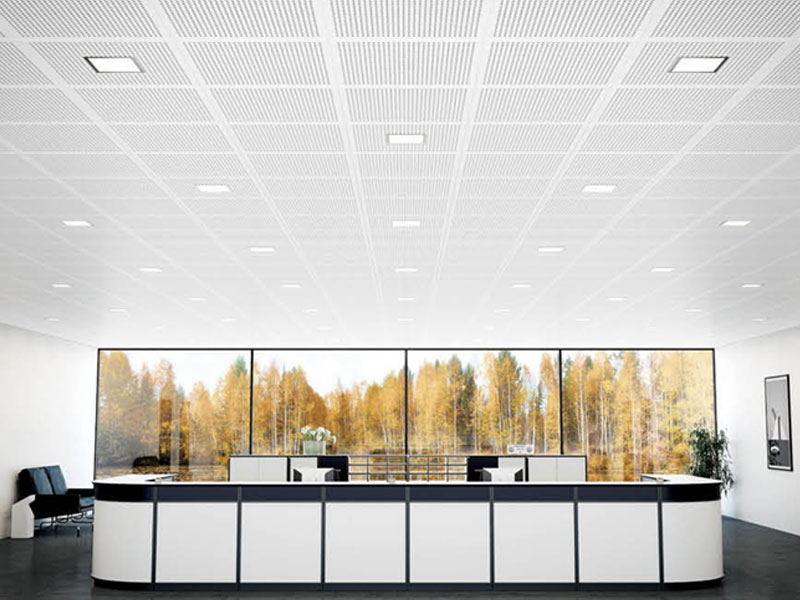
Aluminum fastener boards are widely used in residential ceilings due to their durability and portability, especially in kitchens and bathrooms. Aluminum fastener board ceilings are similar to integrated ceilings but differ in some respects. Simply put, integrated ceilings include aluminum fastener boards and the electrical appliances mounted on them. Given the popularity of aluminum fastener board ceilings, today we will introduce the construction process of ceiling aluminum fastener board ceilings for everyone. Let's take a look together
1. Construction preparation
Materials such as aluminum alloy square plate, joist, and hanger rod; construction tools including impact drill, toothless saw, hacksaw, fastener, screw, plumb bob, and angle square
2. Base line snapping
After preparing the basic materials, firstly, we need to find the core point of the room to be decorated based on the elevation level line of the decoration floor and the designed elevation. Then, along the elevation level of the entire ceiling, we should draw the position lines of the joists on the wall with the core point of the room as the center
Snap the line at the base level
3. Install the main joist ceiling
After drawing the ceiling elevation line and the joist spacing position line, we will confirm the elevation under the suspender, and then install the already prepared suspended ceiling, which needs to be fixed to the ceiling with expansion bolts
4. Install the main joist
The main joist is typically selected as C-type 38 light steel joist, with spacing controlled within a range of 1200mm. During installation, ceiling tiles matched with the main joist are used to connect with the hanger rods
5. Install side joists
According to the ceiling clearance requirements, fix 25*25 painted joists around the walls with cement nails, ensuring that the spacing between cement nails is not greater than 300mm
6. Install secondary joists
The secondary joist is hung on the main joist through hanging parts. When the length of the secondary joist requires multiple continuous extensions, secondary joist connectors are used. While hanging the secondary joist, the ends are connected and aligned first, and then fixed
7. Install metal plates
After the main joist, edge joist, and sub-joist are installed, we need to set up a reference line in the middle of the assembly area along the direction perpendicular to the sub-joist. Then, align the reference line and install towards both sides. During the installation process, be careful to handle gently, and at the same time, press lightly on both sides of the square plate in order along the flanging part, snap it into the joist, and push it tight
8. Liquidation
After installing the aluminum fastener plate, it is necessary to use a cloth to thoroughly clean the entire surface of the plate to ensure that there are no dirt, fingerprints, or other contaminants
9. During the acceptance of ceiling works, the following documents and records should be checked
1. Construction drawings, design specifications, and other design documents for the ceiling project
II. Product qualification of materials, functional testing reports, site inspection records, and re-inspection reports
III. Acceptance records of concealed works
IV. Construction records
I believe that after reading the above article, everyone has gained a certain understanding of the construction process of ceiling aluminum buckle board suspended ceilings. We hope that our introduction can be of some help to you

